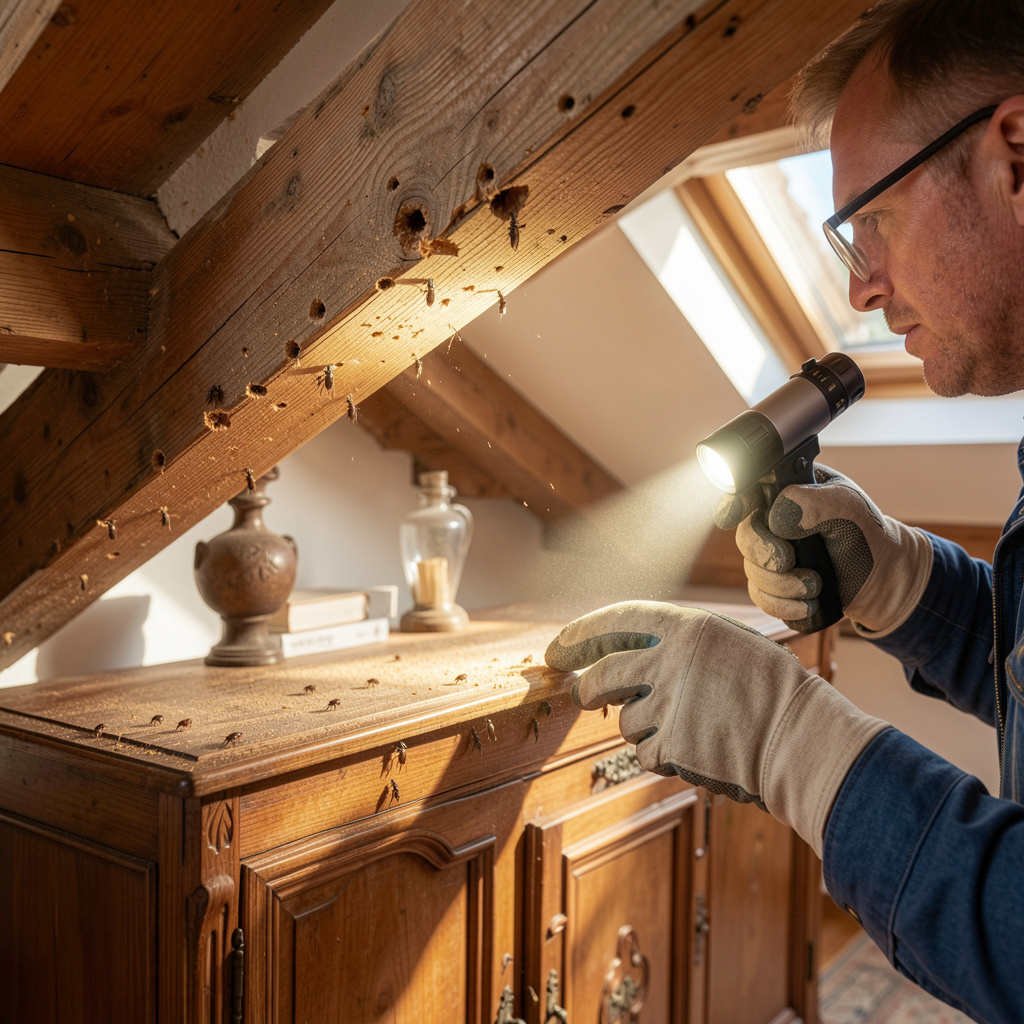
Is That Dust Under Your Furniture Woodworm Frass?
Have you noticed a small pile of fine dust collecting beneath a wooden chair, antique cabinet, or dining table? While it may seem like ordinary household dust or sawdust, it could actually be woodworm frass—one of the clearest signs of an active woodworm infestation.
Woodworm frass is often overlooked because it looks harmless at first glance. However, it can indicate that wood-boring beetle larvae are actively feeding inside your furniture. Catching this warning sign early can help prevent extensive damage to valuable wooden items and even structural timber in your home.
In this guide, you’ll learn what woodworm frass is, how to identify it, how it differs from ordinary dust, and what steps you should take if you discover it beneath your furniture.
What Is Woodworm Frass?
Despite the name, woodworm is not actually a worm. It refers to the larvae of wood-boring beetles, such as the Common Furniture Beetle, Deathwatch Beetle, House Longhorn Beetle, and Powderpost Beetle.
As the larvae tunnel through wood, they feed on the timber and produce a fine, powder-like waste material known as frass. This material is pushed out through tiny exit holes or cracks in the wood, where it collects beneath furniture or wooden structures.
Fresh frass is one of the strongest indicators that woodworm activity may still be ongoing.
What Does Woodworm Frass Look Like?
Woodworm frass is often mistaken for ordinary dust, but it has several distinctive characteristics.
Fresh woodworm frass is usually:
- Light cream, beige, or pale brown in color
- Dry and powdery
- Similar in texture to very fine sawdust
- Found directly beneath small holes in wooden surfaces
- Collected in small piles or scattered around affected areas
The appearance of frass can vary slightly depending on the species of wood-boring beetle, but it is generally much finer than wood shavings produced by drilling or cutting.
Where Is Frass Commonly Found?
Frass usually accumulates directly below infested timber.
Common locations include:
Antique Furniture
Inspect beneath:
- Chairs
- Tables
- Cabinets
- Wardrobes
- Dressers
- Bookshelves
Older furniture made from untreated timber is particularly susceptible to woodworm.
Wooden Floorboards
Fine powder may appear between floorboards or around skirting boards if structural timber is affected.
Roof Timbers
Lofts and roof spaces are common areas for woodworm activity.
Check beneath:
- Rafters
- Joists
- Roof trusses
- Loft flooring
Window Frames and Doors
Although less common, untreated wooden frames can also produce frass if infested.
Is It Frass or Just Ordinary Dust?
Many homeowners struggle to tell the difference.
Here’s how they compare:
| Feature | Woodworm Frass | Household Dust |
|---|---|---|
| Color | Cream to light brown | Grey or mixed colors |
| Texture | Fine, dry powder | Soft and fluffy |
| Location | Beneath woodworm holes | Throughout the room |
| Source | Wood-boring beetle larvae | Dirt, fibers, skin cells, pollen |
| Reappears After Cleaning | Yes, if infestation is active | Gradually over time |
If powder consistently returns beneath the same piece of furniture after cleaning, woodworm should be considered.
Does Frass Always Mean an Active Infestation?
Not always.
Old frass can remain trapped inside furniture or cracks for years and may fall out if the furniture is moved.
However, fresh frass appearing repeatedly is one of the strongest signs of an active infestation.
Signs that suggest active woodworm include:
- Fresh, pale-colored frass
- New exit holes
- Live adult beetles during spring or summer
- Increasing amounts of powder over time
If no fresh frass appears after cleaning, the infestation may already be inactive.
Why Does Frass Appear?
As larvae feed inside timber, they create tunnels known as galleries.
To keep these tunnels clear, they push waste material toward the surface. Over time, this waste exits through tiny holes or cracks and falls beneath the furniture.
The presence of frass means internal tunneling has occurred, although it does not always indicate how severe the damage is.
Other Signs of Woodworm to Watch For
Frass is rarely the only symptom.
Other warning signs include:
Small Exit Holes
Tiny round holes measuring approximately 1–3 mm in diameter are one of the most recognizable indicators of woodworm.
Weak or Soft Timber
Wood weakened by tunneling may:
- Feel spongy
- Crack easily
- Crumble around edges
- Develop loose joints
Adult Beetles
Small brown beetles emerging during spring and summer indicate that the life cycle is continuing.
Visible Internal Tunnels
If damaged wood breaks open, winding galleries may become visible beneath the surface.
Which Furniture Is Most at Risk?
Woodworm commonly affects:
- Antique wardrobes
- Dining tables
- Wooden chairs
- Cabinets
- Chests of drawers
- Vintage desks
- Bookshelves
- Handmade wooden furniture
Furniture stored in damp garages, lofts, or basements is particularly vulnerable.
What Should You Do If You Find Frass?
If you discover suspicious powder beneath furniture, don’t panic. Follow these steps:
Step 1: Clean the Area
Carefully remove all visible dust and powder.
Step 2: Inspect the Furniture
Look for:
- Exit holes
- Cracks
- Weak timber
- Loose joints
Step 3: Monitor for Fresh Frass
Check the area over the following days or weeks.
Fresh powder appearing again usually indicates active larvae.
Step 4: Check Nearby Furniture
Adult beetles can lay eggs on other wooden items nearby.
Inspect surrounding furniture and structural timber for similar signs.
Step 5: Seek Professional Advice
If fresh frass continues to appear or structural timber is affected, arrange a professional timber inspection.
How to Prevent Woodworm Frass
Preventing woodworm is much easier than repairing damaged timber.
Follow these preventive measures:
- Keep furniture dry.
- Maintain good indoor ventilation.
- Repair plumbing and roof leaks promptly.
- Reduce humidity levels.
- Apply suitable wood preservatives where appropriate.
- Inspect antique furniture regularly.
- Avoid storing valuable furniture in damp environments.
Routine inspections help identify problems before they become serious.
When Should You Call a Professional?
Professional treatment is recommended if:
- Fresh frass continues appearing after cleaning.
- Multiple pieces of furniture are affected.
- Structural beams show signs of damage.
- Timber feels soft or unstable.
- Live beetles are present.
- You’re uncertain whether the infestation is active.
A qualified timber specialist can identify the beetle species, assess the extent of the infestation, and recommend the most effective treatment plan.Visit online https://www.shashel.eu for more details.
Common Myths About Woodworm Frass
Several misconceptions can lead homeowners to ignore important warning signs.
Myth 1: All sawdust beneath furniture is woodworm frass.
False. Ordinary sawdust from repairs or woodwork is usually much coarser and appears only after cutting or sanding.
Myth 2: Frass always means severe structural damage.
Not necessarily. While frass indicates tunneling has occurred, the extent of internal damage varies depending on the species, duration of the infestation, and type of timber.
Myth 3: Vacuuming the powder removes the problem.
No. Cleaning away frass only removes the visible evidence. If larvae are still inside the wood, they will continue feeding and produce more frass over time.
Conclusion
Finding fine dust beneath your furniture can be concerning, especially if it’s woodworm frass. Unlike ordinary household dust, frass is a byproduct of wood-boring beetle larvae feeding inside timber and is often one of the earliest visible signs of an active infestation.
By learning to recognize its appearance, monitoring for fresh deposits, and checking for other warning signs such as exit holes and weakened wood, you can detect woodworm early and prevent costly damage. Regular inspections, proper moisture control, and prompt professional treatment are the most effective ways to protect your furniture and preserve the beauty and strength of your wooden possessions for years to come.
